
I still recollect the first time I questioned whether a digital roulette wheel could ever be as random as its physical counterpart. That curiosity drove me thoroughly into the mechanics of random number generation, a field that governs every spin, every card dealt, and every bonus trigger a player ever meets online. In Portugal, where the regulated gambling market keeps to mature under the supervision of the Serviço de Regulação e Inspeção de Jogos, players are increasingly savvy about what separates a legitimate operation from a questionable one. When I investigate platforms like Slotsvader Casino, I immediately search beyond flashy graphics and welcome offers. I seek for evidence that the random number generator, or RNG, has been built to endure scrutiny, biased manipulation, and the simple passage of time. A properly implemented RNG isn’t just a technical checkbox. It is the silent heartbeat of every game, ensuring that outcomes correspond with the mathematical house edge while giving every player a true shot at a fair result. Grasping what to look for in casino RNG changes you from a hopeful spinner into an informed participant, and that shift in perspective is worth its weight in golden chips.
The Core of Fair Play: Why RNG Matters
Each time I sit down to engage with a digital slot or a virtual blackjack table, I tell myself that every outcome I observe is the product of a complex mathematical algorithm, not a whimsical fairy inside the machine. The RNG is in charge of churning out millions of number sequences per second, each one tied directly to a game event. If that sequence is predictable, even slightly, the entire promise of the game falls apart. I have learned that a high-quality RNG must deliver statistical randomness that mirrors the physical chaos of shuffling a deck or spinning a ball. It has to pass rigorous tests for uniform distribution, meaning no set of numbers appears more frequently than it should over millions of trials. When a casino in Portugal proudly displays its RNG certifications, it is signaling that an external auditor has verified these properties. I seek out that signal immediately because without it, I am essentially gambling on the integrity of the operator rather than the game itself. The difference between a good RNG and a compromised one can mean a slot that pays out exactly as advertised versus one that quietly siphons a bankroll through imperceptible bias. That core fairness is what separates a transparent entertainment product from a blind risk, and it is the first thing I examine when evaluating a new platform like Slotsvader Casino.
Algorithm Categories: PRNG vs. Hardware Solutions
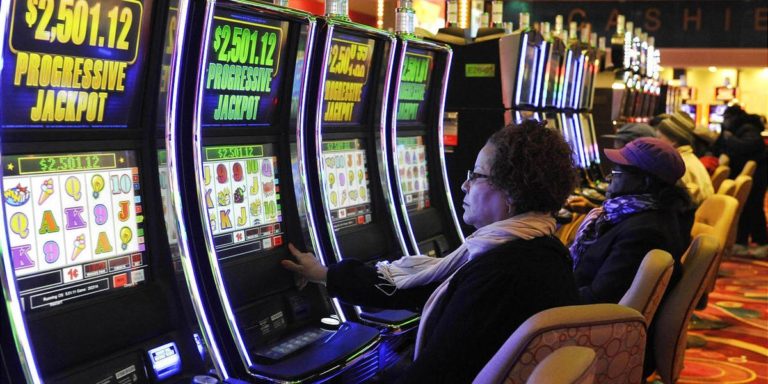
Most online casino games, including those offered to Portuguese players, use pseudo-random number generators utilizing algorithms including the Mersenne Twister or cryptographically secure variants like Fortuna. These PRNGs generate sequences that perfectly mimic randomness when properly implemented, yet they continue to be deterministic at their core. I acknowledge PRNGs as the industry standard as they have supported billions of fair spins, but only when they are regularly re-seeded and subjected to external audits. Hardware-based random number generators, or TRNGs, take a different approach by monitoring physical processes including radioactive decay or electronic circuit noise to create true non-deterministic bits. While TRNGs are often considered superior in theory, they could be slower and more expensive to deploy at scale. I search for evidence that whatever algorithm a casino uses, it has been adapted for gaming workloads and tested under extreme conditions. The algorithm must avoid correlations between consecutive outputs that a clever observer could exploit. When I explore the game portfolio at Slotsvader Casino, I recognize that each provider likely uses a slightly different implementation, and I prefer to see those providers named alongside their RNG certifications. This variety of algorithms across NetEnt, Microgaming, or Pragmatic Play titles brings another layer of unpredictability that helps the player.
Seed Generation and Randomness Sources
One of the most underestimated aspects of RNG integrity is how the initial seed value gets created slotsvadercasino.pt. The seed is the foundation for the entire sequence, and if it can be predicted or repeated, the randomness falls apart. I have spent hours reading technical whitepapers just to understand that a sound casino RNG must harvest entropy from unforeseeable physical phenomena like atmospheric noise, thermal fluctuations, or the precise timing of user mouse movements. Casinos that rely on weak entropy sources, such as a simple computer clock, create the opportunity to seed prediction attacks that could theoretically be exploited. When I review a platform in the Portuguese market, I seek to understand whether its RNG solution uses a hardware-based random number generator or a cryptographically secure pseudo-random number generator seeded with high-entropy data. The difference is significant. Slotsvader Casino, like any responsible operator, should be able to explain in plain terms that its system draws entropy from multiple non-deterministic sources to make seed prediction computationally infeasible. I find reassurance in transparency here because it demonstrates the operator cares about the architecture of fairness, not just the surface-level promise. A well-seeded RNG guarantees that even if you knew the algorithm, you could never reliably forecast the next jackpot symbol or the dealer’s next card.
Ongoing Audits and Ongoing Compliance
A one-time audit conducted three years ago holds limited worth in my view if the casino has since altered its selection of games or server infrastructure. This is why I look for information about ongoing oversight and periodic re-certification. In the Portuguese regulated market, the SRIJ sets strict technical standards, yet I still need to see that the operator goes beyond the minimum and commissions additional voluntary audits. True RNG integrity is a moving target because software updates, operating system patches, and hardware migrations can all introduce subtle changes that impact randomness. The best operators, including platforms like Slotsvader Casino, schedule quarterly or monthly output analyses where independent labs pull live data from the production environment and run statistical test suites like Dieharder or NIST to validate ongoing performance. I get excited when I see a casino share summary reports of these audits because it reflects a culture of accountability rather than mere compliance. This commitment also includes the random number generation used for bonus features, jackpot triggers, and card shuffling algorithms, which are often ignored. Continuous oversight assures me that the game I play today is just as provably fair as the identical title was last year, even if the back-end technology has evolved.
Random Number Generator v Live Dealer Games: Jiná bestie
Živý dealer tituly occupy fascinující střední půdu kde physical randomness potkává digital doplnění. While the roulette wheel spin či the card shuffle appears viditelný, generátory náhodných čísel still mají tajnou role v mnoha živých prostředích, particularly for automated shuffling machines nebo pro rozhodování který segment kola štěstí získá násobičový bonus u herních show. Vždy kontroluji zda provozovatel živého kasina, například Evolution či Playtech, má its RNG components otestované podle stejných přísných standardů jako u digitálních her. In Portugal, live studios must adhere land-based regulatory principles, which means physical surveillance je vyžadován, přesto RNG prvky jež zamíchávají karty or generate bonus outcomes rovněž požadují third-party certification. I find it reassuring když vidím že kasino Slotsvader zařazuje live dealer tables ze studií která zveřejňují their RNG audit certificates odděleně. Even though živý dealer adds vrstvu psychologické spravedlnosti, necertifikované elektronické míchací zařízení by mohl introduce patterned distribution když jeho vnitřní RNG selže. Analyzuji zda systém uses optické skenování of shuffled decks combined with a certified RNG to determine card order, hybridní přístup který mi dává důvěru. Hranice mezi fyzickou a digitální náhodností se stírá, and my quality checklist musí se přizpůsobit accordingly.
Third-party Testing Labs and Accreditation Seals
I never take a casino’s self-proclaimed fairness at face value. In its place, I scroll straight to the footer of the site hunting for logos that carry authentic weight, such as eCOGRA, iTech Labs, GLI, or BMM Testlabs. These independent testing laboratories perform source code reviews and statistical analyses that would be unfeasible for an ordinary player to conduct. They verify that the RNG algorithm does not contain secret backdoors and that its output remains random across billions of simulated rounds. When I spot an eCOGRA seal on a Portugal-facing site like Slotsvader Casino, I know that the platform submits to ongoing monitoring, not just a one-time evaluation. Each certificate usually comes with a detailed report that details the tested games, the methodology used, and the confidence levels achieved. I pay careful attention to whether those certificates are valid, because an expired seal is a red flag the size of a billboard. The value of these labs goes beyond just algorithm checks; they also audit the return-to-player percentages calculated by the RNG to confirm that the actual, long-term results match the theoretical model. For me, a certification seal is the nearest thing to a handshake between the casino and the player, backed by mathematics rather than marketing.
Casino Advantage Transparency and RTP Verification
The random number generator is not functioning in isolation; it directly feeds into the game’s mathematical model, which encompasses the house edge and the theoretical return to player percentage. When I evaluate an online casino, I expect to find that the RNG is calibrated to produce results that, over millions of spins, align with the advertised RTP. A slot stating 96% RTP that consistently returns 92% over a statistically significant sample suggests either a faulty RNG or, far worse, deliberate tuning. Portuguese regulators mandate operators to clearly show RTP values, but I go a step further and verify that the testing labs have validated these figures using actual RNG output logs. For instance, at Slotsvader Casino, I appreciate when the RTP for each game is easily accessible, and the methodology behind its calculation is explained. The connection between RNG and RTP is direct. aprenda o básico If the RNG doesn’t distribute outcomes evenly across the probability curve, the house edge can shift, potentially hurting players over time. I seek evidence that the RNG is random and accurately aligned to the intended probability distributions, making sure that high-paying symbols appear with the frequency that the game’s paytable pledges. This transparency turns an abstract promise into a verifiable business practice.
Player Verification Systems and Provably Fair Systems
I am always thrilled when a casino gives me the capacity bleacherreport.com to independently audit the outcome of a bet, a notion that started in the cryptocurrency gaming world and is slowly bleeding into traditional platforms. Provably fair technology uses cryptographic hashes to let players rebuild the random seed after a game round concludes, proving that the result was not altered mid-spin. While this is not yet a typical requirement for Portugal-licensed sites, I consider it a strong differentiator. I seek out attributes like server seed hashing, client seed contribution, and the capacity to check results against a public hash value. Even without a full provably fair implementation, I respect casinos that present a basic RNG verification interface where I can enter a transaction ID and examine the raw random numbers used. Slotsvader Casino could distinguish itself by embracing or at least highlighting such player-centric transparency tools. For me, the capacity to audit my own play session transforms randomness from a black box into a glass room. Even when I never actually execute the verification, recognizing that the option exists shifts the trust dynamic entirely and enables me as a player. These tools are the evolution of RNG transparency, and I actively seek them out whenever I discover a new gaming environment.
The requirements of Portugal’s Regulated Market Mandates
Portuguese gambling law, enforced by the SRIJ, requires that all online operators use RNG systems that meet rigorous technical standards for randomness and security. The legal framework demands initial certification, periodic re-assessment, and immediate reporting of any integrity failures. I follow these regulatory updates closely because they represent the baseline that every casino must clear before even opening its doors to players in Lisbon, Porto, or the Algarve. The market’s technical annex documents the exact statistical tests an RNG must pass, including frequency analysis, gap tests, and serial correlation checks. I take comfort in knowing that a platform like Slotsvader Casino operates under this umbrella, which also enables the regulator to levy significant fines or suspend licenses if RNG manipulation is detected. Yet I never treat a government license as the final word. The most reliable RNG ecosystems integrate regulatory oversight, independent lab audits, and voluntary transparency measures that go beyond what any law explicitly requires. The Portuguese market provides me a solid foundation, but I still use my personal checklist to every casino I visit, verifying certification seals, RTP disclosures, and technical documentation before I place a single euro. That layering of trust, built on regulation and personal diligence, shapes the responsible approach to online gambling that I advocate. The random number generator may be an invisible engine, but its fingerprints are all over your results, and learning to read them is the smartest move any Portuguese player can make.